

OUT STRATEGIC INTENT (2025-2027)
Busselton Community Safe Space (BCSS) offers free, drop-in mental health support led by peer volunteers. BCSS was formally incorporated in October 2022 to serve Busselton and surrounding regions. Our strategic intentions for 2025-2027 outline our priorities and measurable outcomes, and the practical steps we’re taking to strengthen our impact and long-term sustainability.
Why BCSS exists
The World Health Organisation defines mental health as a state of mental well-being that enables people to cope with the stresses of life, realise their abilities, and contribute to their community. It is integral to our well-being as humans and to building thriving regional communities.
The South West context
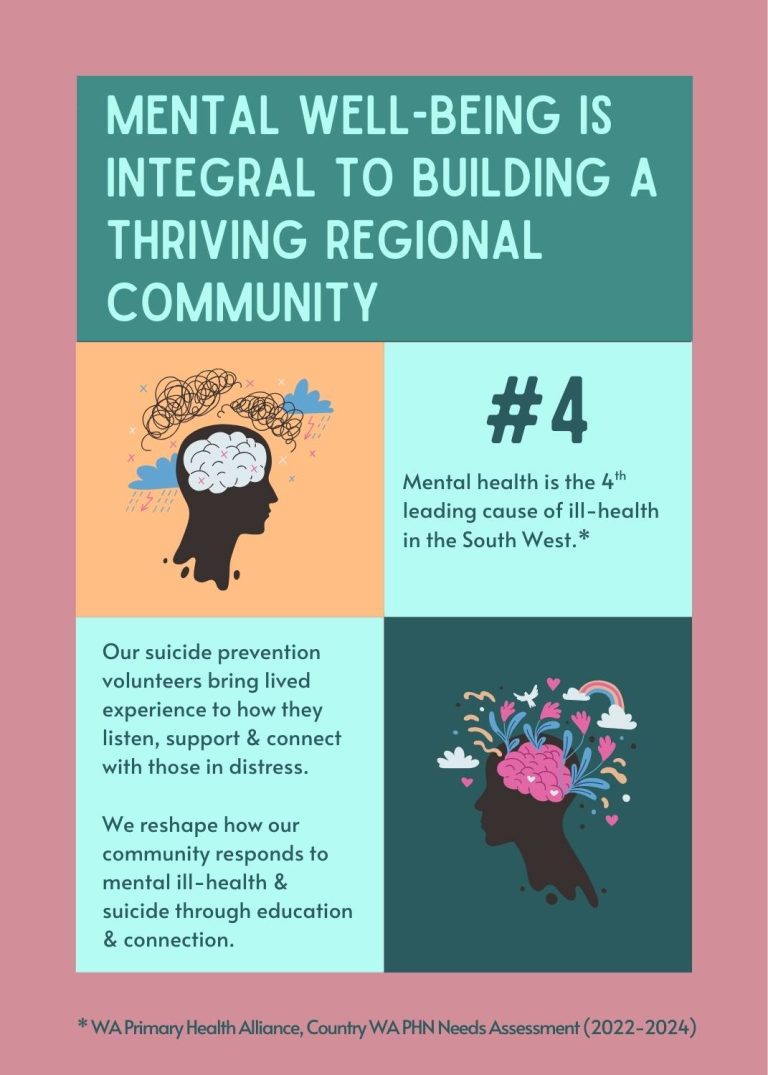
In the South West, mental health is identified as the fourth leading cause of ill-health, at 11% (WA Primary Health Alliance, Country WA PHN Needs Assessment 2022-2024).
BCSS began as seven people connecting for support over their lived experience of mental ill-health. We grew into a dedicated community group led by suicide prevention volunteers, each with lived experience of crisis.
We recognise the courage it takes to live through these experiences and honour the unique stories of those who know this struggle firsthand.
Our mission is rooted in survival, resilience, and lived wisdom, making BCSS more than a Safe Space. We are reshaping how our community responds to mental health challenges and suicide through education and connection. BCSS volunteers are trained in a peer-support approach that prioritises listening, holding space, and connecting.
BCSS is a non-profit that depends on donations and volunteers to deliver a much-needed service in a regional city.
What makes BCSS different
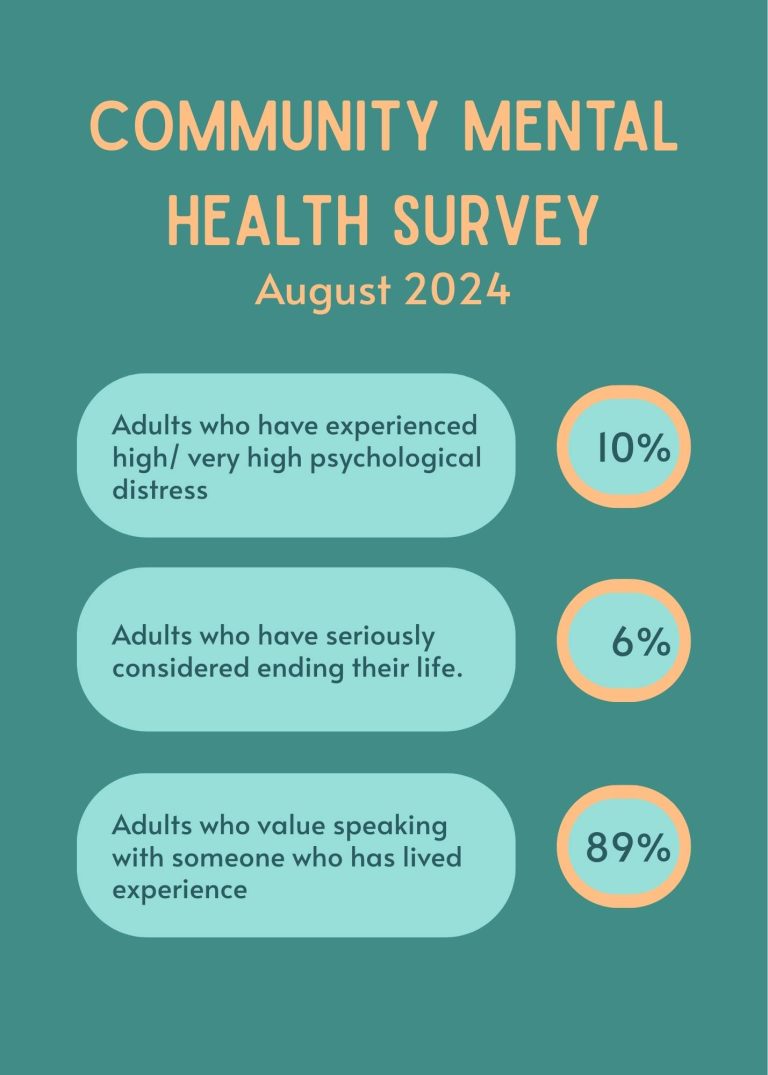
In August 2024, BCSS surveyed the community to better understand its mental health needs Over 89% of respondents value being able to speak with someone who has faced similar challenges. The most valued qualities in our service were closely aligned to our values: Non-judgmental support, a safe environment, and a friendly, informal atmosphere. Practical needs included being free of charge, offering someone to talk to, protecting privacy, showing compassion, and not requiring a doctor’s referral.
As a non-clinical, community-based organization, BCSS does not provide medical advice. However, it offers a safe, non-judgemental space for help seekers and shares valuable information about local medical providers, mental health services, and emergency support, ensuring that every guest has access to the resources they may need.
The need is significant. Almost half of Western Australians will experience a mental health episode in their lifetime, and recent ABS figures indicate 43% have been affected by disorders including anxiety, depression, and substance abuse. In the South West, about 10% of adults have experienced high or very high psychological distress, and about 6% of them have seriously considered ending their life (ABS, National Study of Mental Health and Wellbeing 2020-2022).
BCSS in action today
- A lived-experience, non-clinical model providing non-judgmental support in a safe environment with peer volunteers who truly understand. We do not provide medical advice but do provide understanding and information about local medical providers, mental health services, and emergency support.
- Our drop-in centre opens for four hours every Friday night, aligning with community preferences identified in the BCSS community survey (78% preferred Friday and 81% preferred 5–9pm).
- The drop-in space is intentionally designed with comfortable furnishings, ambient sound, and climate control located at LAMP Inc., a complementary organisation supporting people with mental health challenges.
- BCSS services are open to any adult seeking mental health support. No referral, booking, or payment is required.
Our Guiding values
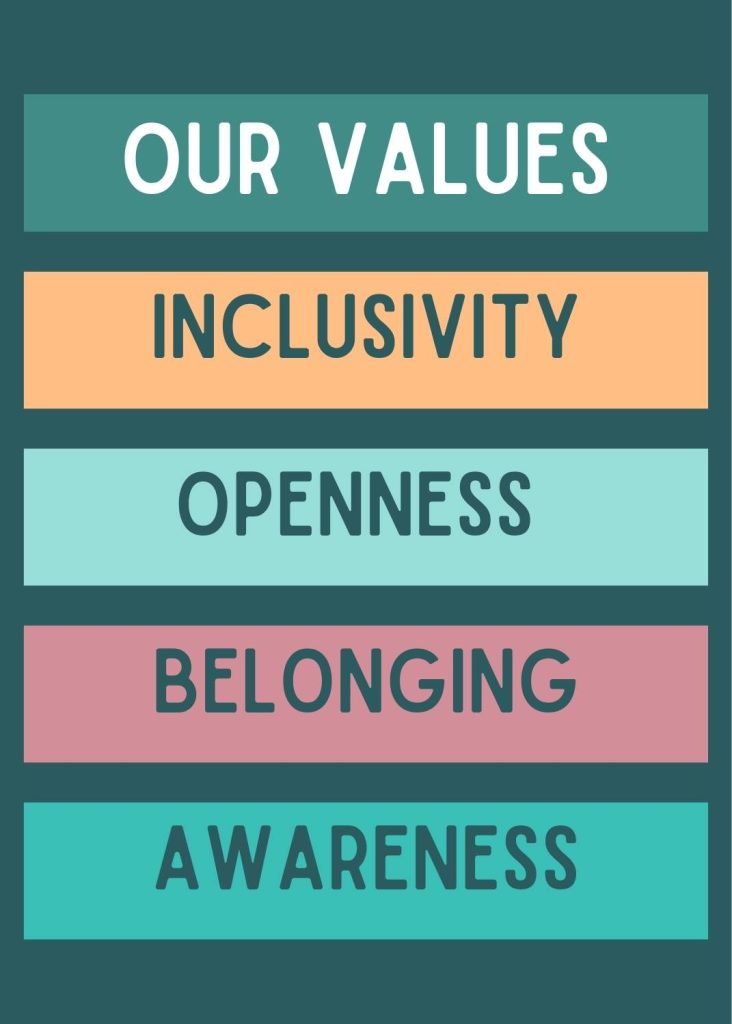
These values guide our Board’s decision-making and how we pursue our 2025-27 goals:
- Inclusive: welcome everyone to a safe space
- Openness: foster respect, trust, and open dialogue to support individuals
- Belonging: build meaningful connections and encourage a sense of belonging
- Awareness: educate and raise awareness to eliminate stigma and suicide
Our strategic priorities (2025–2027)
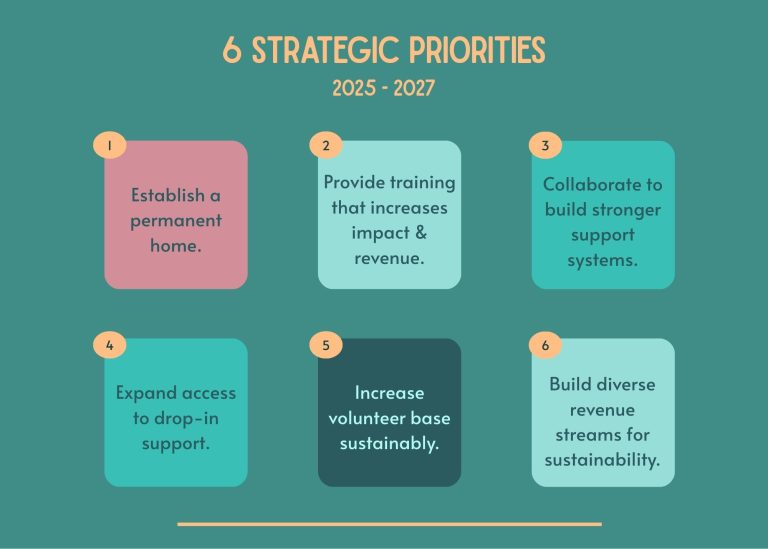
We have six priorities from January 2025 to December 2027:
- Secure a permanent home for BCSS.
- Train front-line clinical staff and service providers in lived experience crisis support.
- Build collaborative relationships with other providers.
- Recruit and train more volunteers.
- Expand drop-in service hours.
- Increase and diversify revenue streams.
How we measure progress
Our Action Plan provides a three-year roadmap setting out actions and measurements to track progress. The strategy is designed to be dynamic and adaptable with the Board determining and documenting any changes are determined by the Board and documented to inform future planning.
Action Plan
Priority #1 Establish a permanent home
BCSS will evaluate at least five properties against suitability criteria and track the percentage meeting criteria. BCSS will fundraise via local businesses and national grant programs, tracking the number of funding sources engaged, and funds raised against goals.
Once funds are secured, BCSS will engage architects and interior designers to develop a trauma-informed welcoming space, tracking completed design plans, and adherence to timelines and budget.
Priority #3 Collaborate to strengthen support
BCSS will engage with regional mental health organisations, measuring the number of meetings, documenting outcomes, and tracking the number of collaboration agreements/ MoU’s established.
BCSS will create a resource-sharing network for information and referrals, tracking the number of resources shared, the frequency of use, and network usage/feedback.
Finally, BCSS will host joint community workshops where possible, measuring the number of workshops hosted, participant count, and participant satisfaction scores.
Priority #5 Volunteer growth and sustainability
To grow our volunteer base to keep pace with expanded support, BCSS will seek funding to run targeted recruitment campaigns, track volunteer numbers, and streamline volunteer onboarding and engagement processes.
BCSS will offer volunteer orientations and mentorship programs, measuring number of orientations and retention rates. We will expand volunteer roles to include non-crisis activities, such as administration, measuring the number of non-crisis volunteers and volunteer satisfaction scores.
Priority #2 Training for impact and income
BCSS will provide training sessions on trauma-informed care, cultural sensitivity, and active listening from a lived-experience perspective. We will measure the number of modules completed and approved, and participant satisfaction scores.
BCSS will also generate income from training frontline clinical staff and stakeholders. We will measure the number of participants trained, total revenue generated, and participant satisfaction scores.
Priority #4 Expanded drop-in support
BCSS will survey community members about extended hours, measuring survey completion and analysis of preferred hours for expanding drop-in support.
This will also require funding for additional staff and volunteer overheads. We will measure funds raised against funding goals and expanded volunteer shifts.
BCSS will seek funding to develop outreach capabilities that allow greater accessibility, measuring the number of outreach activities delivered and aiming for a 20% growth in usage rates stemming from outreach efforts.
Priority #6 Diverse income for long-term sustainability
BCSS will raise funds through grant applications focused on mental health innovation, rural health, and suicide prevention, measuring applications submitted and funding received.
BCSS will create a tiered business sponsorship program and measure the number of sponsorship agreements, funds raised, and sponsor satisfaction scores.
Lastly, we will secure community funding for annual events, such as wellbeing workshops, to raise awareness and donations, measuring the number of events, attendees, donations raised, and participant satisfaction scores.
Governance, oversight and transparency
BCSS is managed by volunteer Board members, a paid administration staff member, and peer support volunteers. Board roles and tenures are documented along with the Administration and Volunteer Coordinator role.
As part of its strategic process, BCSS undertook a SWOT analysis to support critical thinking and risk management. We recognise our strengths, weaknesses, opportunities, and threats as part of responsible governance. Our key strengths include good governance and a strong current financial position, and our risks include a heavy board workload and reliance on the sole staff member. We leverage our strengths to plan for and sustainably manage our risks.